
Articles
Cannabis for Chronic Pain: What Helps and How to Choose
Nov
Cannabis can ease chronic pain for some people, and research links non-inhaled cannabinoids with improvements in pain, physical function and sleep quality. What works for you depends on the product type, the THC and CBD content, the dose and your own health. This guide walks you through how the evidence reads, how to match a format to your pain, what to watch for on safety and how to shop in Canada. Our flower, edibles, vapes, concentrates and CBD topicals are all available online across the country, with live chat if you want help choosing.
TL;DR
- Research on non-inhaled medical cannabis and cannabinoids reports improvements in pain, physical function and sleep quality for people with chronic pain, and individual response varies.
- Choose by cannabinoid content (THC and CBD percentages or milligrams) and format, not by strain name alone.
- Oils and edibles act slowly and last long, inhaled products act within minutes, and topicals stay on the skin where you apply them.
- Start low, avoid alcohol and driving, and talk to your doctor if you take other medication or have a heart, lung or mental health condition.
- Medical access in Canada runs through a health care practitioner and federally licensed sellers or Health Canada registration. Adult recreational shoppers can browse our full range online.
Table of Contents
- What the research says about cannabis and chronic pain
- THC, CBD and what they do for pain
- Cannabis strains for pain: read the cannabinoids, not the name
- THC oil, tinctures and edibles: slower, longer relief
- Inhaled products for fast relief
- Topicals and CBD for localized pain
- Safety: what to know before you start
- How to access cannabis for medical purposes in Canada
- A starter routine for new users
- Our perspective
- Where to start at FV Buds
- FAQ
- Sources
What the research says about cannabis and chronic pain
The largest body of evidence comes from a systematic review in The BMJ that pooled randomized trials of non-inhaled medical cannabis and cannabinoids in chronic non-cancer pain. It found improvements in pain, physical function and sleep quality compared with placebo. The trials covered several pain types: neuropathic (nerve) pain, spasticity-related pain, nociplastic pain (pain from a sensitized nervous system, as in fibromyalgia), nociceptive pain (from tissue and joints), mixed pain and cancer-related pain.
Two practical points come out of that research.
- Pain type matters. Nerve pain and mixed pain are well represented in trials. If your pain comes from a different source, your doctor can help you judge where cannabis fits in your plan.
- Response is personal. Dose, product, body chemistry, other medications and how long you have lived with pain all shape the result. That is why a careful, gradual approach beats a big first purchase.
Health Canada’s expert panel, in its 2024 review of the Cannabis Act, recorded what patients say they need most: reasonable access, reliable information, specific products and supportive health professionals. Those four needs are a useful checklist for anyone starting out, and we come back to them below.
THC, CBD and what they do for pain
THC (tetrahydrocannabinol) is the compound that causes the high. CBD (cannabidiol) does not cause intoxication. Many products contain both, in different ratios. If the terms are new, our explainer on CBD and THC, their benefits and risks covers the basics, and our piece on the science behind CBD pain relief goes deeper on the CBD side.
A simple way to think about the choice:
| If you want | Look at | Why |
|---|---|---|
| Daytime use with a clear head | CBD-dominant products, such as CBD tinctures and topicals | CBD does not cause intoxication |
| Relief that lasts through the evening or night | THC-containing oils and edibles | Slow onset, long duration |
| Fast action for a flare | Inhaled flower, vapes or concentrates | Effects begin within seconds to minutes |
| Targeted relief on a sore joint or muscle | CBD topicals | Applied right where it hurts |
Read the label first. Every legal product lists its THC and CBD content, and that number is the most useful thing you can compare.
Cannabis strains for pain: read the cannabinoids, not the name
Shoppers searching for the best strains for pain relief usually want a short list. The honest answer is that a strain name on its own tells you little. Names are not standardized, and the same label can describe products with very different chemistry. What predicts your experience better is the cannabinoid and terpene profile (terpenes are the aromatic compounds in cannabis) and the concentration of each, along with your own tolerance.
Here is a practical way to shop for flower:
- Check THC and CBD percentages. A balanced THC and CBD profile is a common starting point for people who want relief without a heavy high.
- Note the terpene information when the product page lists it, and keep track of which profiles you like.
- Keep a log. Write down product, amount, time, pain level before and after, and side effects. Two weeks of notes will tell you more than any strain ranking.
- Change one thing at a time. Switch product or dose, not both.
On our flower category you can browse indica, sativa and hybrid options with detailed product information and customer reviews. For evening pain that disturbs sleep, our guide to cannabis strains for a restful night’s sleep is a good companion read.
THC oil, tinctures and edibles: slower, longer relief
Oral products give you controlled, measurable amounts. According to RACGP guidance on medicinal cannabis for chronic pain, oral cannabis oils allow controlled administration but start working more slowly. The same guidance lists the common THC effects to plan for: dizziness, drowsiness, anxiety, and changes in thinking and attention.
The timing is the part new users get wrong. HealthLink BC states that ingested cannabis starts to act within 30 minutes to 4 hours and can last up to 12 hours, with residual effects up to 24 hours. Inhaled cannabis acts within seconds to minutes and can last up to 6 hours, with residual effects up to 24 hours.
What this means in practice:
- Wait before you take more. With an edible or oil, give it the full window before a second dose. Taking more too soon is the classic mistake.
- Start with a small amount and raise it gradually across several days.
- Plan the day around it. A long duration suits an evening routine better than a workday.
We wrote a full guide to choosing, dosing and using edibles for pain. Our edibles category includes gummies, chocolate, candy, tinctures and beverages, so you can pick a format you will actually stick with.
Inhaled products for fast relief
When pain spikes, speed matters, and inhaled products act the fastest because effects begin within seconds to minutes. That makes vapes and refills and concentrates (oils, shatter, resin, wax and budder) a fit for breakthrough pain. Their shorter duration, up to 6 hours according to HealthLink BC, means some people pair a fast format in the day with a slower oral product in the evening.
Concentrates are strong, so go carefully: begin with the smallest amount and wait to feel the effect. Our guides to cannabis hash and cannabis distillate explain how each is made and used, and the wax and budder page shows the textures on offer.
If you are choosing a vape, confirm the product page states its cannabinoid content and the format (disposable, cartridge or kit), and check your device matches the cartridge. Our accessories category covers the equipment side.
Topicals and CBD for localized pain
If your pain sits in one place, such as a knee, a shoulder or the lower back, a topical keeps the product where you need it. Creams and balms are applied to the skin, and CBD topicals do not cause a high. Many people use them alongside an oral product or on days they need a clear head.
Our CBD topical guide explains how to choose and use one in Canada. You can browse CBD pain creams and tinctures in our CBD and topicals section, including the Marena Wellness CBD Pain Cream (300mg) and the Boost CBD Tincture, which comes in 750mg to 1500mg strengths.
Safety: what to know before you start
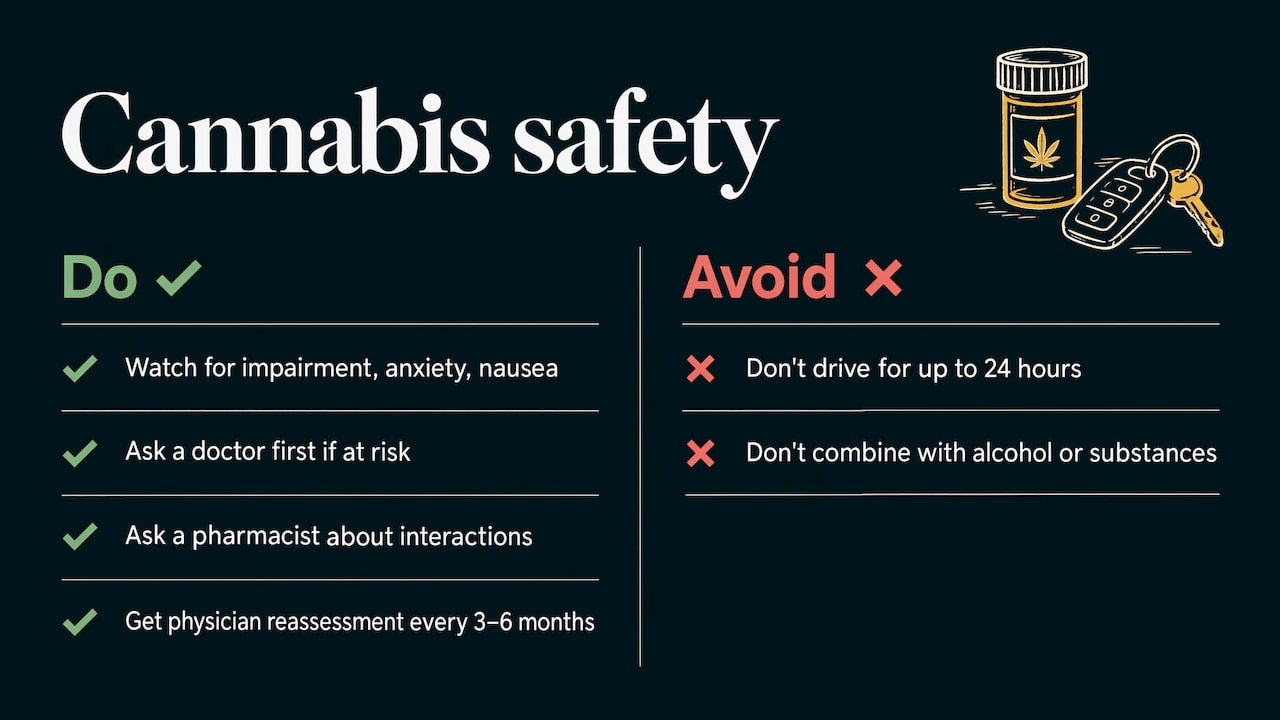
Cannabis is a real drug with real effects, and using it well means knowing them. HealthLink BC lists these possible effects: confusion, sleepiness, impaired memory, concentration, coordination and reaction time, anxiety, dizziness, dry mouth, nausea, vomiting, psychosis and cannabis hyperemesis syndrome (repeated severe vomiting linked to regular use). It advises against combining cannabis with alcohol or other substances and against driving.
Driving. The RACGP guidance warns against driving or operating machinery for up to 24 hours after consuming cannabis because of collision risk and impaired psychomotor function. Plan your doses around that window.
Who should talk to a doctor first. The College of Physicians and Surgeons of British Columbia, in its standard for cannabis for medical purposes, says cannabis is generally not appropriate for people under 25, people with a history of psychosis or cannabis use disorder, people with an active substance use disorder, and people with cardiovascular or respiratory disease. If any of that describes you, see your doctor or nurse practitioner before using cannabis for pain.
Medication interactions. The Canadian Rheumatology Association’s position statement notes that information on interactions is limited, but cannabis may add to the psychomotor effects of tranquilizers, antidepressants, anticonvulsants and alcohol. If you take any of these, ask your pharmacist or prescriber before you begin, and take extra care or avoid the combination.
Regular check-ins. The same CPSBC standard says people using cannabis should be reassessed by their physician at least every three to six months to confirm it is still appropriate. A pain log makes those appointments far more useful.
How to access cannabis for medical purposes in Canada
Under the Cannabis Act, Health Canada explains that authorized patients can buy from federally licensed sellers, or register with Health Canada to produce a limited amount themselves or through a designated producer. The authorization comes from a health care practitioner, so the first step is a conversation with your doctor or nurse practitioner about your pain and what you have already tried.
CPSBC guidance asks the prescribing physician to assess addiction risk and to document that conventional therapies were tried without success before authorizing cannabis. Go to that appointment with your pain log, a list of past treatments and your questions. That is the documentation they need.
Adults who shop for themselves can also browse our full range online. Either way, the practical needs Health Canada’s panel heard from patients apply: clear product information, honest answers and a seller who is easy to reach.
A starter routine for new users
If you are new to cannabis and living with ongoing pain, a staged approach keeps things simple.
- Talk to your doctor or nurse practitioner, especially if you take other medication or have a heart, lung or mental health condition.
- Pick one product and one format. A CBD-dominant tincture or topical is a gentle place to begin.
- Start with the smallest labelled amount and keep it there for several days.
- Wait out the onset time. Allow up to four hours for edibles and oils before you consider more.
- Log your results daily: pain score from 0 to 10, sleep, mood, side effects.
- Adjust slowly, one change at a time, and bring the log to your next check-in.
- Store products safely, locked and out of reach of children and pets.
Our perspective
Most of the people who come to us about pain are not looking for a high. They want a better evening, a night of sleep, or to get through a workday with less discomfort. That is why we built our store around information: detailed product pages, cannabinoid content you can compare, customer reviews and a help center that answers the basic questions before you ask.
We think a range matters for pain. A CBD cream for a sore knee, an edible for the long evening, a vape for a sudden flare: these are different tools, and our flower, edibles, concentrates, vapes, CBD and topicals let you build a routine from one place. Live chat means a real person can help you compare formats when the choice feels overwhelming.
Our advice is the same one we give every new customer: go slowly, keep notes and bring your doctor into the picture. Fast shipping across Canada means you can order what suits you and start your routine without a trip across town.
the author
Where to start at FV Buds
If you want a straightforward first order, start with the format that fits your pain. For a clear-headed daytime option, look at our CBD and topicals. For the long evening, browse our edibles. For fast relief, see our vapes and refills.

Every product page carries detailed information and customer reviews, and our live chat and help center are there when you want a second opinion on a choice. We ship across Canada.
FAQ
Does cannabis help with chronic pain?
Research on non-inhaled medical cannabis and cannabinoids reports improvements in pain, physical function and sleep quality in people with chronic pain. Results differ from person to person, so a gradual start and a pain log help you see what works for you. Your doctor can help you place cannabis within your overall pain plan.
Which cannabis strains are best for pain relief?
Strain names are not standardized, so the label alone is a weak guide. Compare THC and CBD content and, where listed, terpene information, then track your own response. Our flower category lists indica, sativa and hybrid options with details and reviews to help you compare.
Is THC oil good for pain relief?
Oral oils give you measurable amounts, and they work slowly: ingested cannabis can take 30 minutes to 4 hours to act and can last up to 12 hours. THC can cause dizziness, drowsiness and anxiety, so begin with a small amount and do not drive afterward.
Can I use cannabis if I take other medication?
Ask your pharmacist or prescriber first. Cannabis may add to the psychomotor effects of tranquilizers, antidepressants, anticonvulsants and alcohol, and information on interactions is limited. Avoid alcohol while using it.
How do I get cannabis for medical purposes in Canada?
You need authorization from a health care practitioner. With it, you can buy from federally licensed sellers or register with Health Canada to produce a limited amount yourself or through a designated producer. Bring a list of treatments you have already tried to your appointment.
Sources
- Medical cannabis or cannabinoids for chronic non-cancer and cancer related pain, The BMJ
- Position Statement: A Pragmatic Approach for Medical Cannabis and Patients with Rheumatic Diseases, Journal of Rheumatology
- Cannabis use, HealthLink BC
- Cannabis for Medical Purposes, College of Physicians and Surgeons of British Columbia
- Medicinal cannabis in the treatment of chronic pain, RACGP
- Cannabis for medical purposes under the Cannabis Act, Health Canada
- Legislative review of the Cannabis Act: final report of the expert panel, Health Canada
Recommended
- Edibles for Pain: How to Choose, Dose and Use Them Well
- CBD Topical for Pain: How to Choose and Use It in Canada
- Healing Naturally: The Science Behind CBD Pain Relief
