
Articles
Pink Goo Strain: Lineage, Effects and How to Buy It in Canada
Nov
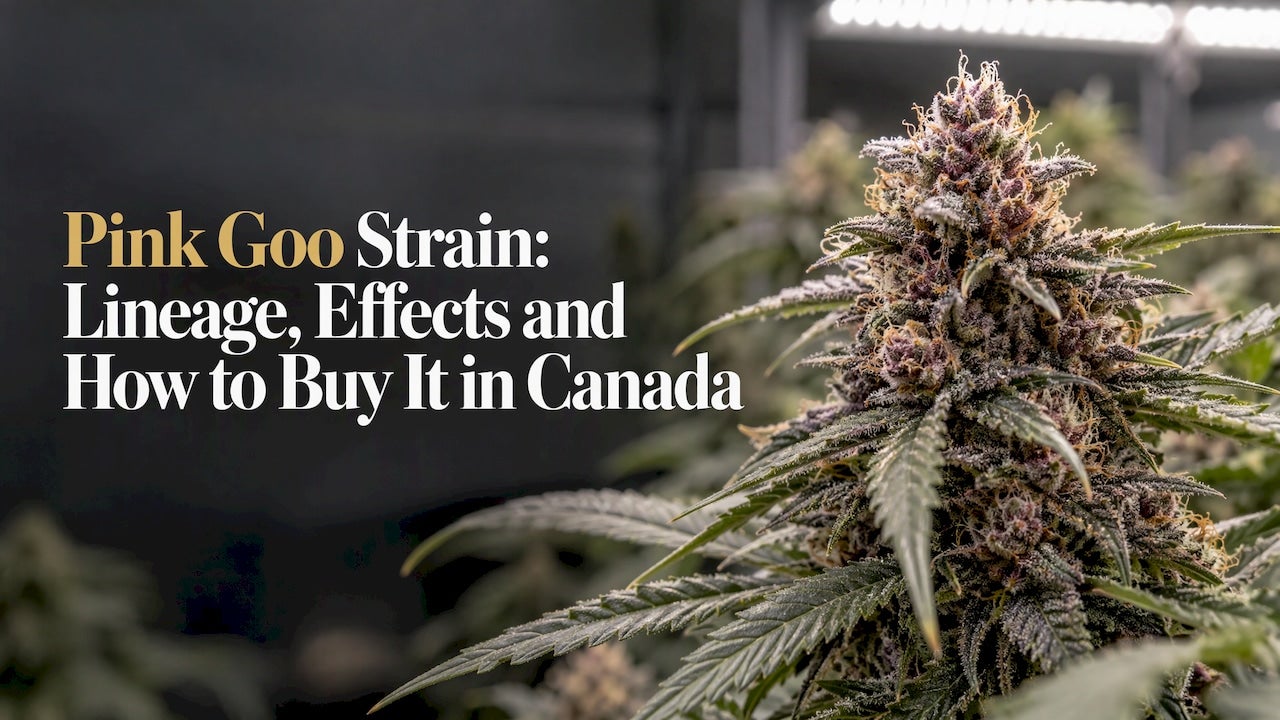
Pink Goo, also written Pinkman Goo, is an indica-dominant hybrid reported to be a three-way cross of Granddaddy Purple, Grape Ape and Northern Lights #5. It is known for sticky, resin-coated pink and purple buds, a sweet floral and gassy nose, and THC that often lands near 29% on Canadian labels. The name tells you what to expect on the bud. The label tells you what to expect in your body, and that is the part worth reading carefully before you buy.
This guide covers where the strain comes from, what people report about it, how to read its THC and terpene numbers under Canadian rules, and how to choose a similar indica-dominant flower if you are new or returning to cannabis.
TL;DR
- Pink Goo is an indica-dominant hybrid, reported as Granddaddy Purple x Grape Ape x Northern Lights #5, and it is often called Pinkman Goo.
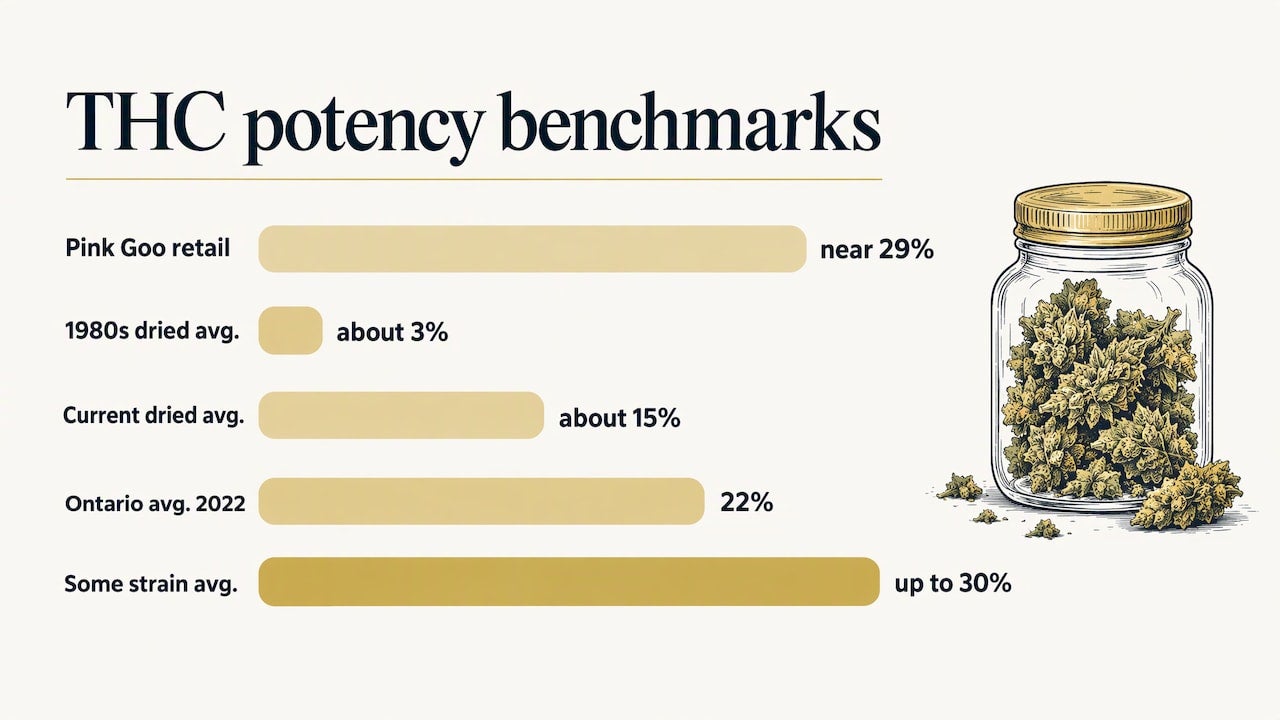
- Lab results published for retail jars commonly show around 29% THC and about 6% total terpenes, which is strong flower.
- Reported effects are heavy, calming and body-focused, but research says strain names alone do not reliably predict how you will feel.
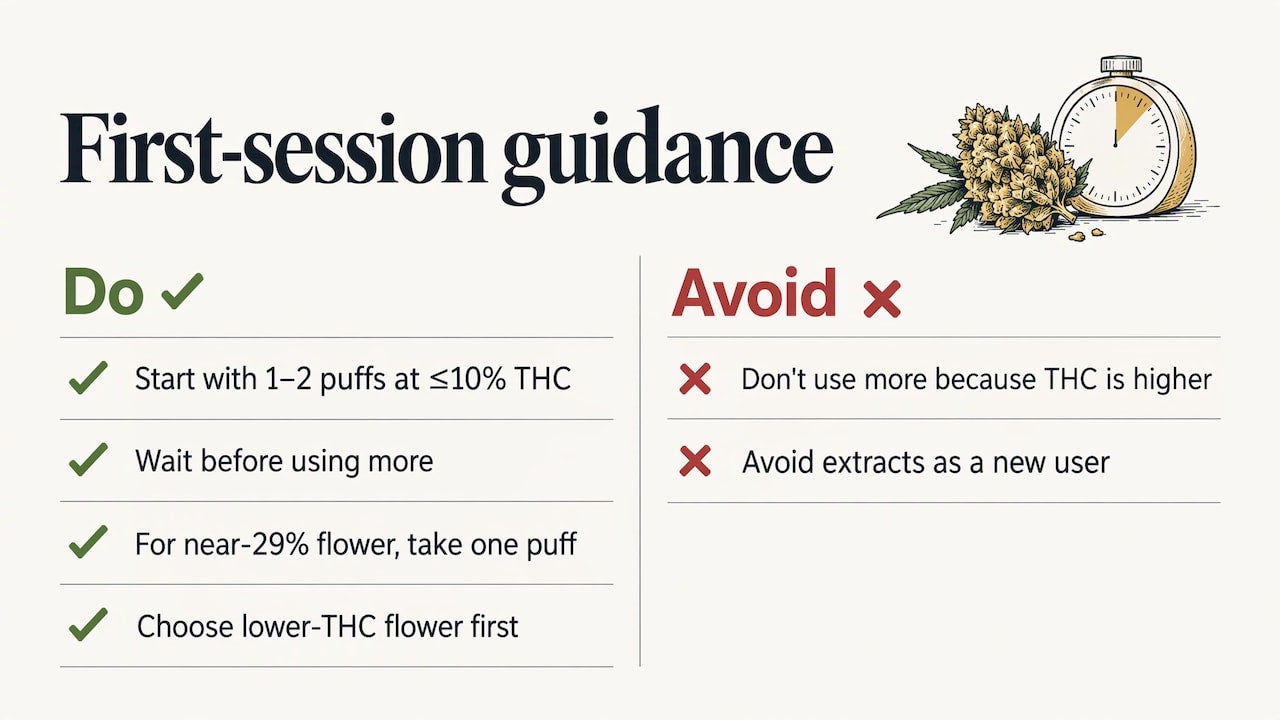
- Health Canada advises beginners to start with one or two puffs of a product at 10% THC or less and to wait before taking more.
- Read the label for total THC, net weight, lot number and packaging date, and buy from the legal market.
Table of Contents
- What is Pink Goo?
- Lineage: the three parents
- Aroma, flavour and look
- Reported effects: what to expect and what research says
- How strong is Pink Goo?
- How to read a Pink Goo label in Canada
- Is Pink Goo right for you?
- Our perspective
- Finding a Pink Goo style flower
- Shop indica flower with live chat support
- Using sticky, resinous flower well
- FAQ
- Sources
What is Pink Goo?
Pink Goo is a high-resin, indica-dominant cultivar. The name comes from its look: dewy, sticky droplets of resin sitting on frosted leaves, often over pink and purple flower centres. Because it is so sticky, the buds clump and cling to a grinder, which is the first thing growers and shoppers notice.
The alternate name, Pinkman Goo, is the one you will see in strain databases. Cannapedia lists it as Pinkman Goo, bred by Twompson Prater (also spelled Praeter) of CaliCropDoc, with a three-way cross of Granddaddy Purple, Grape Ape and Northern Lights #5. It reports THC up to 28.0% and says the resinous-drop mutation is said to raise THC by up to 4%. In Canada, the name Pink Goo is the one you will meet on shelves and in online listings, and the nickname that links it to a certain television chemist is the reason many people search for both spellings.
Two things are worth holding onto:
- Lineage reports vary. Cultivar histories are passed along by breeders, producers and databases, and they are rarely verified by a neutral party. Treat the parentage as the commonly reported story rather than a guarantee.
- Each jar is its own product. Two batches of the same strain name can differ in THC, terpene content and freshness. The label on your package is the information that applies to you.
Lineage: the three parents
If the reported cross is right, Pink Goo inherits from three well-known indica-leaning parents.
| Parent | What it is generally known for |
|---|---|
| Granddaddy Purple | Purple colouring, grape and berry aroma, relaxing reputation |
| Grape Ape | Grape-forward flavour, heavy body feel, dense buds |
| Northern Lights #5 | Classic earthy, sweet, resinous indica foundation |
That mix explains why descriptions of Pink Goo lean toward grape, sweet floral and earthy notes with a gassy edge. It also explains why it is sold as an evening flower. Indica-dominant products tend to be marketed for slower, calmer use.
Aroma, flavour and look
Descriptions of Pink Goo across Canadian reviews are fairly consistent. Expect:
- Look: Pink and purple tones under a thick coating of sticky trichomes, with darker green buds where the resin has run.
- Nose: Sweet floral, sometimes with pepper or gas on the jar-crack.
- Flavour: Sweet, earthy and fruity, with a pine-and-earth base once lit.
- Terpenes: Published lab results for retail jars list myrcene, caryophyllene and limonene as the leading terpenes. One published Canadian review of a Pink Goo jar recorded 29.68% THC and 6.0% total terpenes, with myrcene at 1.2%, beta-caryophyllene at 0.8% and limonene at 0.6%.
Those figures belong to one batch. Your jar may read differently, which is another reason to check the label rather than rely on a strain page.
Reported effects: what to expect and what research says
People describing Pink Goo use words like euphoric, happy, uplifted, relaxed and heavy-bodied. That fits an indica-dominant profile. A study of how people actually report their experiences found that indica-dominant cultivars were associated with greater low-arousal effects, which matches the calm, sleepy reputation.
The same study adds an honest caveat about the whole strain-naming system: popular claims that cultivar classification and terpene content produce distinct subjective effects are unsubstantiated. In plain terms, the label “indica” or “Pink Goo” is a loose guide. Your own body, tolerance, dose, the method you use and what you have eaten all matter more. That is exactly why the practical sections below focus on dose and labels rather than names.
Does Pink Goo treat a medical condition?
No report on Pink Goo establishes that it treats any medical condition. Strain pages sometimes list conditions that users say it helps with, but these are user-reported tallies, not clinical findings. If you use cannabis for a health reason, talk to your doctor or nurse practitioner about it, especially if you take other medicines, because THC can interact with some of them. Our guide on the difference between medical and recreational cannabis explains how the two routes differ in Canada.
How strong is Pink Goo?
Strong, by any standard. Reported retail results sit near 29% THC, and the parent cultivar database lists up to 28.0%. To put that in context, Health Canada notes that dried cannabis potency has risen from an average of about 3% THC in the 1980s to around 15% today, with some strains averaging as high as 30%.
Pink Goo is also typical of what is on Canadian shelves. A study of products offered to Ontario consumers found that 94% of dried-flower products contained at least 20% THC, with average THC of 22% in early 2022. So a jar near 29% is at the upper end, not an outlier.
What this means for your first session
Higher THC does not mean you should use more. It means a little goes a long way. Health Canada’s advice for lowering risk is to start with one or two puffs of a product containing 10% THC or less and wait. With a flower near 29%, one small puff and a long pause is a sensible way to learn how it affects you.
If you are newer to cannabis, the same logic applies to the product type. Health Canada warns that extracts such as hash, kief, wax and shatter generally contain more THC and can cause greater impairment and serious adverse effects, especially for new or occasional users. Flower in a lower THC range is an easier place to begin.
How to read a Pink Goo label in Canada
A legal Canadian package carries a lot of information, and it is all there so you can make a clear decision. Health Canada’s label guide says packages must show total THC and CBD, product class, net weight or volume, units where applicable, storage conditions, the lot number, packaging date, manufacturer contact details and required warnings.
Here is a quick routine for any jar of flower:
- Find total THC. This is the main cannabinoid behind intoxication. Health Canada also notes that CBD does not produce a high, although it can still affect the body and brain.
- Check the units. For flower, THC is shown per gram. Multiply by the net weight to see the total in the package. Health Canada’s own example: 180 mg/g in a 30 g package equals 5,400 mg of total THC.
- Look at the packaging date. Fresher flower generally smells and handles better, and the date is printed for that reason.
- Note the lot number. It identifies the batch if you ever need to refer to it.
- Read the terpene line if listed. Terpene percentages describe aroma and flavour. Treat them as a guide to the nose of the jar rather than a promise of a particular feeling, in line with the research above.
If you want to understand the cannabinoids behind these numbers, our explainers on the difference between THC and CBD and on CBD and THC benefits and risks go through each one.
Is Pink Goo right for you?
If you are new to cannabis
Pink Goo’s strength makes it a product to approach with respect. Start low, use a small amount, wait and do not stack doses. Edibles need more patience again: Health Canada advises edible users to look for 2.5 mg THC or less and notes that it may take up to four hours to feel the full effects.
A Canadian clinical review by MacCallum and colleagues reports that adverse events are commonly dependent on THC dose and recommends low-dose initiation with slow titration, particularly for medically vulnerable people.
If you have specific health circumstances
The same review flags heightened concern with high-THC products for people under 25, older adults, people with a mental-health history or heart conditions, and those in safety-sensitive jobs. It also stresses clinician monitoring and possible drug interactions. If any of that describes you, speak with your doctor or pharmacist before using a high-THC flower.
Health Canada also advises adults over 55 to buy from the legal market, because illegal-market products are not subject to the same quality controls and may expose consumers to unnecessary health risks.
Stop and get help if
Health Canada advises stopping use and contacting a health care professional for serious side effects such as chest pain, hallucinations, seizure, severe headache, shortness of breath or loss of consciousness. Call emergency services if symptoms are severe. Do not drive or operate machinery while impaired.
Our perspective
Strain names are a starting point for a conversation, not a prescription. Pink Goo has a loyal following because the flower looks and smells distinctive, and we understand the pull of a name like that. What we tell customers is to shop by the numbers on the package: total THC, net weight, packaging date and product type. Those are the facts that stay true from jar to jar.
That is why we put detailed product information, customer reviews and live chat support next to every category on our site. A first-time buyer should be able to ask a question about potency or format and get an answer before checking out. When a particular strain is not in stock, an indica-dominant flower in a comparable THC range with a similar sweet, earthy profile is a sound way to get the evening experience people want from Pink Goo.
Buying legally, starting low and reading the label is a routine that suits recreational and therapeutic shoppers alike.
the author
Finding a Pink Goo style flower
Pink Goo is a licensed-producer cultivar, and availability depends on your province and on what retailers have on hand. If you cannot find it, the useful move is to look for what people like about it: an indica-dominant profile, sweet floral or grape notes, and a heavy evening feel.
When comparing options, work through this short list:
- Dominance: indica or indica-dominant hybrid for a calm, low-arousal profile.
- THC range: pick the figure that matches your experience. If you are new, a lower range is the easier start.
- Aroma notes: grape, berry, sweet floral, earthy or gassy, depending on your taste.
- Format: flower for inhaling, or an edible for a slower, longer experience at a small dose.
Our article on Island Pink strain covers another pink-leaning indica with its effects, aroma and how to use it. If you want a view of the wider market, our guides to British Columbia cannabis and BC’s finest indica strains show what well-regarded indicas look like.
Shop indica flower with live chat support
FV Buds is an online cannabis dispensary for the Canadian market. Our cannabis flower category includes indica, sativa, hybrid and AAAA flower, each with detailed product information and customer reviews, plus bulk deals and on-sale items. Shipping is across Canada, and live chat support and an extensive help center are there if you want a second opinion on potency or format before you order.

If you would rather start with something other than flower, you can also browse edibles, vapes and refills and concentrates, or add accessories such as grinders, which are handy with sticky, resinous buds.
Using sticky, resinous flower well
Pink Goo’s trademark resin is a practical matter as well as a visual one. Some tips that apply to any heavily frosted indica:
- Break it up gently. Sticky buds clump, so a grinder with a pollen catcher helps you avoid waste.
- Keep the package sealed. Follow the storage conditions printed on the label, and keep it away from children and pets.
- Use a measured amount. Because the potency is high, a small pinch goes a long way. Resist topping up until the effects have had time to arrive.
- Plan your setting. An indica-dominant flower is generally an evening product. Choose a calm place and do not mix with alcohol or other sedating substances.
FAQ
Is Pink Goo the same as Pinkman Goo?
Yes, they are used for the same cultivar. Pinkman Goo is the name commonly given in strain databases, and Pink Goo is the shortened name used on many Canadian listings. Both point to an indica-dominant hybrid reported as Granddaddy Purple x Grape Ape x Northern Lights #5.
Is Pink Goo an indica or a sativa?
It is described as an indica-dominant hybrid, often given as roughly 80% indica and 20% sativa. Research suggests these labels are only a loose guide to how you will feel, so your dose and tolerance matter more than the category.
How much THC does Pink Goo have?
Cannabis databases list up to 28.0% THC, and published results for retail jars report about 29%. Those are high figures, so check the total THC on your own package and follow Health Canada’s advice to start with one or two puffs at 10% THC or less if you are new.
Does Pink Goo help with anxiety, pain or sleep?
User reports mention relaxation and sleep, but no report on Pink Goo establishes that it treats any medical condition. If you are considering cannabis for a health concern, speak with your doctor or nurse practitioner first, particularly if you take other medication.
What should I look for in a similar strain?
Look for an indica-dominant flower with a sweet, grape or floral profile, and compare total THC, net weight and packaging date on the label. Our flower category lists product details and reviews, and live chat can help you narrow it down.
Sources
- Pinkman Goo – Cannabis Strain | Cannapedia
- Pink Goo by Pistol & Paris – Puff The Magic
- An Ecological Examination of Indica Versus Sativa and Related Effects – PubMed
- About cannabis – Canada.ca
- On offer to Ontario consumers three years after legalization – PMC
- Cannabis: lower your risks – Canada.ca
- How to read and understand a cannabis product label – Canada.ca
- Is medical cannabis safe for my patients? MacCallum et al., 2021
- Health effects of cannabis on adults over 55 – Canada.ca
Recommended
- Indica Strains
- Island Pink Strain: Effects, Aroma and How to Use It
- Sativa Strains
- British Columbia Weed: Unveiling the Excellence of Canada’s Finest Cannabis
