Articles
Island Pink Strain: Effects, Aroma and How to Use It
Nov
Island Pink is a heavy, evening-leaning indica-dominant cannabis strain from the Pink Kush family, the line of cultivars that grew out of Vancouver Island. You may also see it sold as Island Pink Kush, Pink Island or Long Island Pink. Those names point to the same family of pink-kush-style flower, though each licensed producer grows its own version, so aroma, potency and finish differ from one package to the next. This guide covers where the strain comes from, what it smells and tastes like, what people report from it, how to read the potency on the label and how to use it responsibly.
TL;DR
- Island Pink is an indica-dominant, Pink Kush-style strain, usually picked for relaxing evening use.
- Expect a sweet, floral and citrus-leaning nose over earthy, peppery kush. Exact aroma depends on the producer and the batch.
- Potency varies by batch. Read the total THC and CBD on the package, because Health Canada requires both to be labelled.
- Start low and go slow. Canada’s lower-risk use guidelines advise against driving for at least 6 hours after using cannabis.
- Browse cannabis flower at FV Buds to compare indica-dominant options with detailed product information and reviews.
Table of Contents
- What Island Pink is, and why the names overlap
- Appearance, aroma and flavour
- What effects people report
- How strong is Island Pink?
- Is Island Pink used for therapeutic reasons?
- Using Island Pink responsibly
- Perspective: why batch details matter more than the name
- Finding Island Pink-style flower and similar options
- Shop with confidence at FV Buds
- FAQ
- Sources
What Island Pink is, and why the names overlap
Search for this strain and you will meet at least four spellings: Island Pink, Island Pink Kush, Pink Island and Long Island Pink. There is no single registry that settles the name. The common thread is Pink Kush, a legacy cultivar from Vancouver Island that is believed to descend from OG Kush. A producer’s own account describes Pink Kush as a legacy Vancouver Island strain that ranked as Canada’s top-selling dried flower in 2022. That popularity explains why so many “island” and “pink” names exist: growers across the country built products around the same reputation.
So when you see Island Pink on a menu, treat it as a family label rather than one fixed recipe. One producer may sell a straight Pink Kush selection under that name. Another may sell a cross. A strain review of one commercial version describes it as a cross between D Bubba and Pink Kush, with sweet and tart citrus aromatics over earthy wood. Those are different plants sharing a name, which is why the product page and the lab data matter more than the strain name alone.
How to read a strain name
A name tells you roughly what to expect, not what you will get. Three things on the package tell you more:
- Total THC and CBD percentages. These are the headline numbers for strength.
- Terpene content. A higher terpene total usually means a louder aroma and flavour.
- Packaged-on date and producer. Freshness affects smell and smoothness.
Appearance, aroma and flavour
Pink Kush-style flower is known for dense, frosty buds with pale green leaves and orange pistils, and the “pink” refers more to the floral, candy-like character than to a literal colour. Descriptions of Island Pink tend to line up on the same notes: sweet floral and citrus on top, then earth, wood and a peppery or gassy kush finish. Some people also pick up a vanilla or butterscotch edge.
There is a chemistry reason for the floral side. One Canadian cannabis retailer’s review of aggregated lab panels for Pink Kush reports linalool at 0.72%, caryophyllene at 0.68% and myrcene at 0.45%. Linalool is the terpene associated with lavender, and it is unusual for the kush family to lead with it. If you open a jar and smell lavender, vanilla and sweet spice rather than pure fuel and pine, you are close to the classic Pink Kush profile.
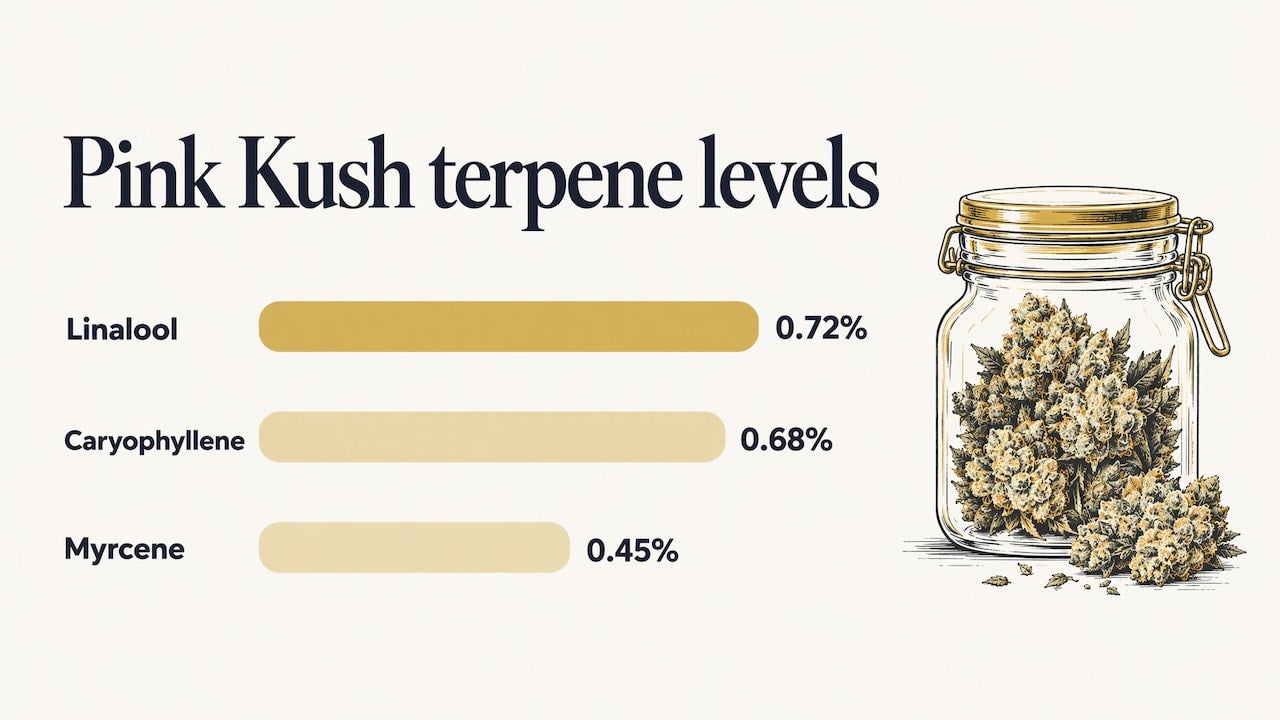
Terpene numbers move between batches and growers, so use them as a guide only. Two jars of Island Pink can smell noticeably different, and neither is wrong.
Terpene cheat sheet
| Terpene | Typical scent | What it adds to Island Pink |
|---|---|---|
| Linalool | Lavender, vanilla, floral | The sweet, perfumed top note |
| Caryophyllene | Black pepper, spice | The warm, peppery kush finish |
| Myrcene | Earthy, musky, ripe fruit | The earthy base of the aroma |
| Limonene | Citrus peel | The tart orange lift some batches show |
What effects people report
Reviewers describe Island Pink in similar terms to classic Pink Kush: a fast, mood-lifting start followed by a calm, heavy body feel. One reviewer wrote that it delivered an instant blast of euphoria that melted stress, followed by tranquil yet focused effects over the next 20 minutes. That is one person’s experience, not a promise. Cannabis affects people differently depending on tolerance, dose, method and mood.
In practice, most people who reach for this style of flower do so for:
- Winding down after work
- Quiet evenings, a film or a bath
- Easing into bedtime
- Appetite and relaxation
Because the profile is indica-dominant, many users keep it for night rather than the middle of a work day. If you want something to pair with errands or exercise, a different profile may fit better.
Common side effects
Dry mouth and dry eyes are the usual complaints. Some people feel dizzy or very sleepy, especially at higher doses. If a session feels too strong, sit or lie down, drink water, and wait it out. Anxiety or racing thoughts are more likely when the dose is too high for your tolerance, which is the main reason to start small.
How strong is Island Pink?
The honest answer is that it depends on the batch. Pink Kush-style flower is typically sold as a high-THC product, and commercial listings for Island Pink often sit in the mid-20s to around 30% total THC. The only number that matters for the jar in your hand is the one printed on it. Health Canada’s rules require that total THC and CBD content appear on the label in bold type, so you can compare products directly.
Why does potency differ between two jars of the same strain?
- Phenotype and growing conditions. Light, feeding, and cultivation method all shift cannabinoid output.
- Harvest and curing. Timing and drying change both THC and terpene retention.
- Age and storage. Terpenes fade as flower sits.
- Different plants under one name. As covered above, “Island Pink” is not one fixed genetic.
A higher percentage is not automatically better. A very high-THC flower can be too much for a newer user, and many experienced users prefer a moderate THC with a rich terpene total. Federal rules also limit what producers can say about how a product will feel. Cannabis makers can state THC and CBD percentages but are restricted from depicting how stoned a product will make someone, so the label gives you numbers rather than a description of the high. That makes reviews, live chat and product detail pages all the more useful.
Is Island Pink used for therapeutic reasons?
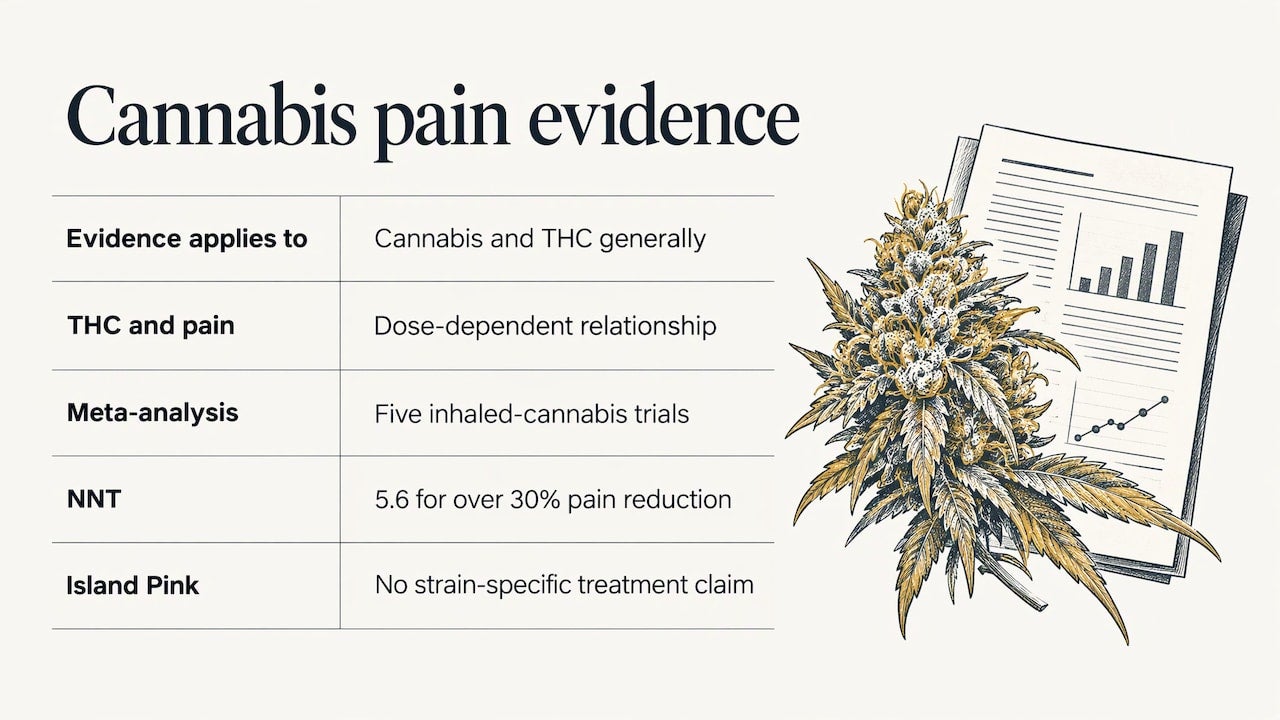
Many adults use indica-dominant flower for relaxation, sleep or discomfort. The evidence base is about cannabis and THC in general, not about this particular strain. A peer-reviewed Canadian review reports that randomized controlled trials have shown a significant, dose-dependent relationship between THC and neuropathic pain relief, and that a meta-analysis of five trials of inhaled cannabis found a number needed to treat of 5.6 for reducing chronic pain by more than 30%. That is evidence for the cannabinoid, not a claim that Island Pink treats any condition.
If you are considering cannabis for a medical reason, talk with your doctor or pharmacist first, especially if you take other medication or have a heart, lung or mental health condition. Our guides on the difference between THC and CBD and the potential health benefits of cannabis explain the basics in plain language, and cannabis for seniors covers extra considerations for older adults.
Using Island Pink responsibly
A strong, sedating, high-THC strain deserves a plan. Canada’s Lower-Risk Cannabis Use Guidelines (LRCUG), developed with CAMH, give the clearest checklist:
- Choose lower-THC or higher-CBD products when you can. The guidelines recommend low-THC products or products with a high CBD-to-THC ratio, occasional rather than frequent use, and no driving for at least 6 hours after using cannabis.
- Keep use occasional. The province of Manitoba’s health page states that daily or near-daily use increases the risk of anxiety, depression, psychosis and schizophrenia, and that lower THC with higher CBD reduces risk.
- Think about the method. The LRCUG user brochure says that smoking is the most harmful way to use cannabis because it affects the lungs directly, and that vaping or edibles are easier on the lungs, though not risk-free.
- Know the baseline. The same CAMH evidence brief notes that abstaining is the most effective way to avoid any risks of cannabis use, and that frequent or intensive use is strongly associated with higher risk of adverse outcomes.
Add a few practical habits: use at home in a comfortable setting, do not combine it with alcohol, store it away from children and pets, and stay in the legal age of your province or territory.
A simple first-time approach
- Take a small amount and wait. Inhaled effects start within minutes, but give it a good 15 to 20 minutes before deciding on more.
- Keep water and a snack nearby.
- Do not plan to drive, even later the same evening, if you have used a high-THC product.
- Write down the batch details and how you felt. It makes the next purchase easier.
Perspective: why batch details matter more than the name
We see the same pattern from shoppers all the time: someone loves a jar of Pink Kush-style flower, searches for the name again, and finds three different products under it. That is why we put detailed product information, customer reviews and live chat support at the centre of how we sell flower. A strain name is a starting point, and the real decision is made on THC, terpene character and the experience other buyers describe.
For Island Pink fans, we would steer you toward the indica-dominant selection in our flower category, where you can compare listings side by side. If you are newer to cannabis, our team is happy to talk you through potency and format in live chat, and our help center covers shipping and ordering questions across Canada. Our view is simple: a good purchase is an informed one, and a fast, reliable delivery should be the easy part.
the author
Finding Island Pink-style flower and similar options
Availability changes from week to week, because flower is sold in limited batches. The most reliable way to see what is in stock now is to open our cannabis flower category and filter by indica or hybrid. If you love the pink-kush profile, look for listings that mention floral, sweet or citrus notes and a relaxing, evening-friendly effect. A pink-named option you can look at today is Death Pink (Smalls) from Mystic Cannabis.
Prefer not to smoke? Your options go beyond flower:
- Edibles give a slower, longer experience and need careful dosing.
- Vapes and refills are convenient and discreet.
- Concentrates are much stronger and best for experienced users. Our guides to hash and shatter explain how they are made and used.
- CBD and topicals suit people who want cannabis products without a strong THC effect.
Shop with confidence at FV Buds
FV Buds is an online cannabis dispensary for adults across Canada. We carry flower, edibles, concentrates, vapes, CBD, topicals and accessories, with detailed product pages, customer reviews, bulk deals and on-sale items. If you are not sure which product suits you, live chat is there to help, and our help center answers most shipping and ordering questions.
Ready to look? Start with our indica and hybrid flower, and add accessories such as a grinder or storage if you need them.
FAQ
Is Island Pink the same as Pink Kush?
They are closely related but not always identical. Pink Kush is the legacy Vancouver Island cultivar, and Island Pink or Island Pink Kush is the name many producers use for their own pink-kush-style product. Some versions are straight Pink Kush and others are crosses, so check the listing for the producer’s description.
Is Island Pink an indica or a sativa?
It is generally described as indica-dominant. Reviewers connect it with relaxing, evening-friendly effects, and the typical listing leans toward a calm body feel. Individual response still varies with dose and tolerance.
How strong is Island Pink?
It is usually sold as a high-THC flower, but the number changes by producer and batch. Check the total THC and CBD printed on the package, since Health Canada requires both to be shown. If you are new, begin with a very small amount.
What does Island Pink taste like?
Expect sweet, floral and citrus notes over earthy, peppery kush. Linalool, caryophyllene and myrcene are the terpenes most often reported for Pink Kush-style flower. The exact balance differs from jar to jar.
Can I drive after using it?
No. Canada’s lower-risk use guidelines recommend waiting at least 6 hours after using cannabis before driving, and a high-THC, sedating indica is a good reason to plan a ride or stay home.
Sources
- Pink Kush legacy strain background
- Island Pink strain review
- Pink Kush lab data and terpene review
- Packaging and labelling guide for cannabis products, Health Canada
- Is Cannabis the Answer to Everything?, The Walrus
- Medical cannabis: the Canadian perspective
- Lower-Risk Cannabis Use Guidelines evidence brief, CAMH
- Long-Term Risks of Cannabis Use, Province of Manitoba
- LRCUG user brochure, CRISM
Recommended
- Island Pink Bubble Hash
- Unveiling the Mysteries of Cannabis Strains: Your Go-To Guide for Finding the Perfect Match
- Death Pink (Smalls) (Mystic Cannabis)
- Jungle Ridge – Pink Tuna Kush
