
Articles
Star of Death Edible: What It Is and Canada’s THC Limits
Nov
A Star of Death edible is a star-shaped gummy sold with an extreme THC dose, often hundreds of milligrams in a single package. It is not the same thing as the Death Star cannabis strain. In Canada, legal edible cannabis is capped at 10 mg of THC per package, so a product advertising far more than that sits outside the legal edible market. Below you’ll find what the name means, what the law says, how a high dose can feel, and how to choose edibles that fit your tolerance.
TL;DR
- “Star of Death” is a nickname for very high-dose THC gummies, not a strain and not a licensed Canadian product category.
- Under the Cannabis Regulations, edible cannabis may not contain more than 10 mg THC per immediate container, however many pieces are inside.
- Health Canada advises new consumers to choose an edible with 2.5 mg THC or less, then wait before taking more.
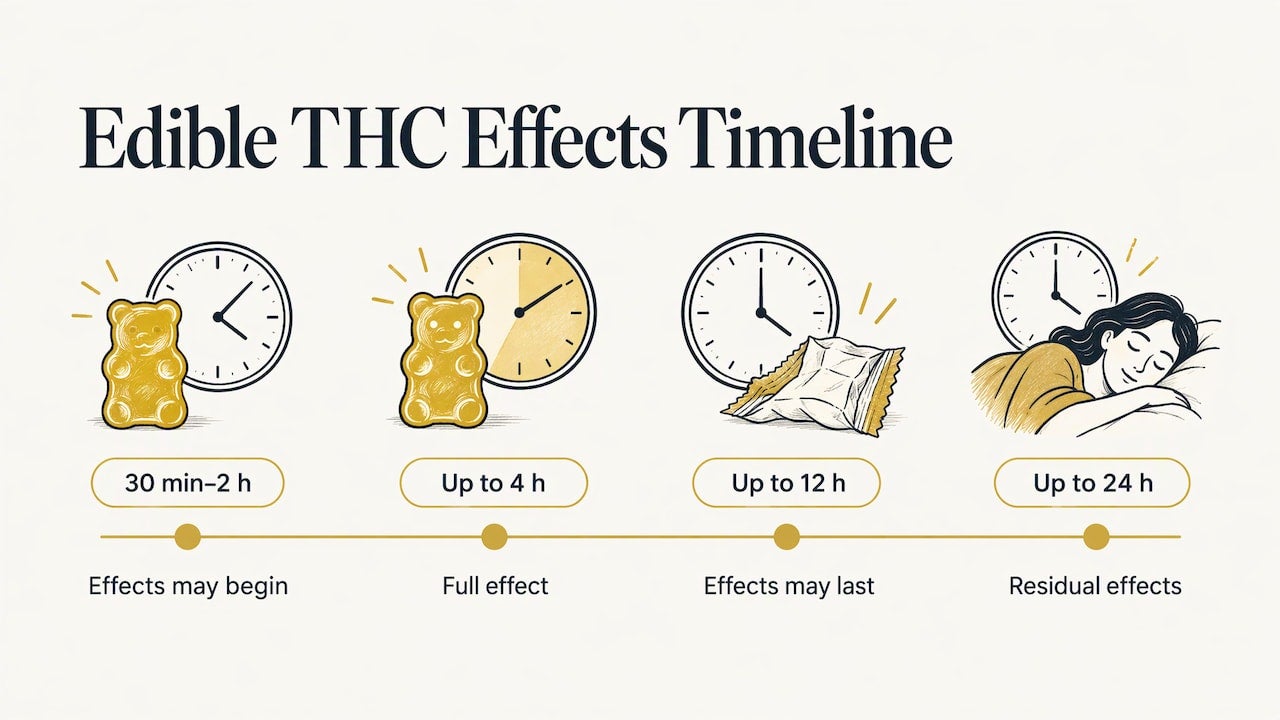
- Edible effects can start 30 minutes to 2 hours after eating, peak around 4 hours, last up to 12 hours and leave residual effects for up to 24 hours.
- Read the label before you eat anything: THC per unit, total THC, health warning, ingredients and allergens should all be there.
Table of Contents
- What a Star of Death edible actually is
- What Canadian law says about THC in edibles
- How a high dose of THC can feel
- How to dose edibles without a bad night
- Reading an edible label before you eat
- Perspective: why we steer people toward measured edibles
- If you want a stronger experience, choose by format
- Shop edibles with the details in front of you
- Other things people ask about the name
- FAQ
- Sources
What a Star of Death edible actually is
The name comes from a type of gummy shaped like a star, marketed on one idea: it is far stronger than anything on a regular dispensary shelf. Online listings describe packages with hundreds of milligrams of THC, sometimes enough that a single piece carries many times a standard dose. The product became a talking point through stand-up comedy and podcast stories about people eating one and regretting it, which is where much of the search interest comes from.
Two things are worth separating right away.
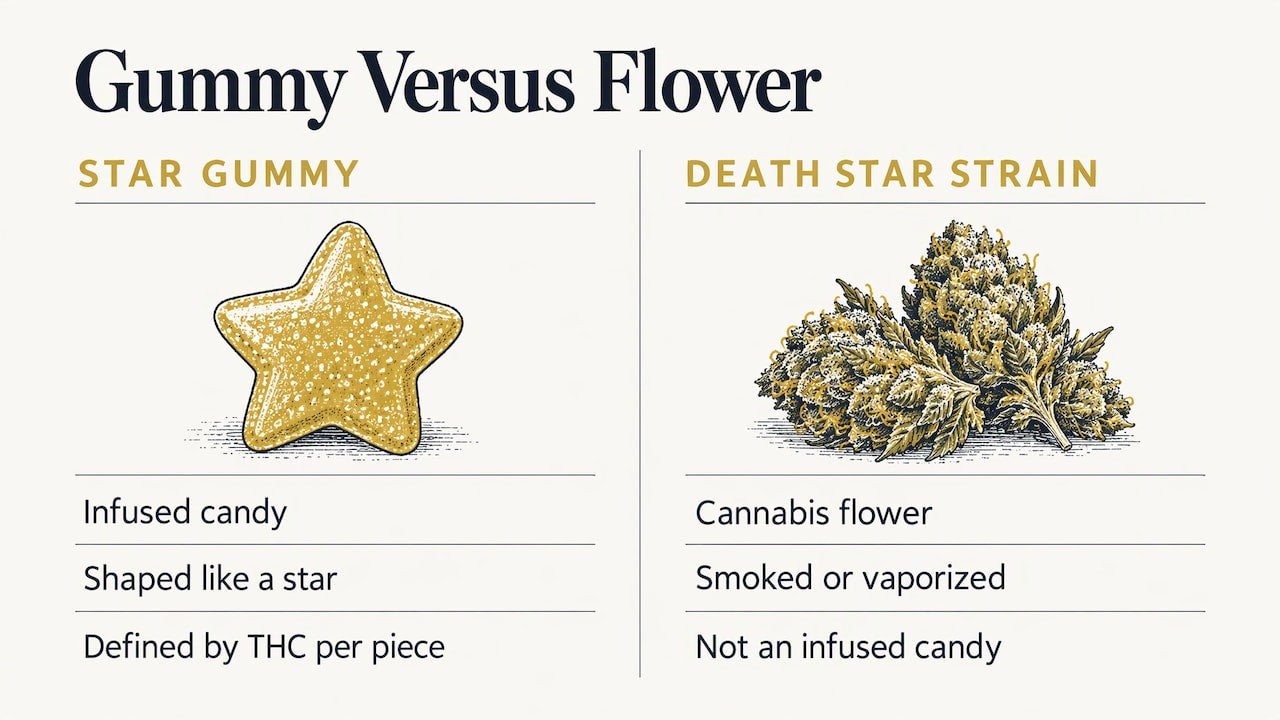
It is a product style, not a strain. The Death Star strain is a cannabis flower you smoke or vaporize. A Star of Death gummy is an infused candy. The similar names cause a lot of confusion, and the two have nothing in common beyond the word “death” and a reputation for strength. If you came looking for flower, our cannabis flower category is the place to browse. If you came for edibles, keep reading.
It is a dose, not a flavour. What defines a Star of Death is the amount of THC per piece. That is the part that matters for your safety, and the part Canadian rules speak to most directly.
What Canadian law says about THC in edibles
Canada regulates edible cannabis tightly. The Cannabis Regulations state that edible cannabis must not contain more than 10 mg of THC per immediate container. Health Canada’s classification guidance explains this is a precautionary maximum that applies to the package, not to each piece. A bag of ten gummies and a bag of one gummy face the same ceiling: 10 mg in total.
That has a direct consequence for the question people actually type into search boxes.
Is a Star of Death edible legal in Canada?
A gummy sold as a food-like edible with hundreds of milligrams of THC does not meet the federal edible limit. The Ontario Poison Centre says legal edible cannabis is limited to 10 mg THC per package, and that products labelled above that amount are unregulated and untested. So a label claiming 500 mg or 1,000 mg on a candy is a warning sign about where the product came from, not a mark of quality.
Health Canada also draws a line between edibles and extracts. Some cannabis extracts can contain up to 1,000 mg of THC per immediate container, but they fall under different rules and are not meant to be eaten like food. The guidance warns that classifying something intended as food as an extract creates serious overconsumption risks and enforcement consequences. Putting an extract in a gummy mould does not turn it into a legal high-dose edible.
What is the strongest edible you can legally buy in Canada?
Under the federal rules cited above, the strongest legal food-like edible package holds 10 mg of THC. That is the whole package. If you want more intensity within the legal market, the usual routes are other product forms that are regulated differently, such as concentrates, and a measured approach to dosing rather than a single high-dose candy.
Can the dose on a label be trusted?
This is the practical problem with high-dose novelty edibles. British Columbia’s Cannabis Edibles Fact Sheet says legal products from licensed producers are tested for THC and CBD content and for contaminants, including solvent residues, pesticides, mould, bacteria and heavy metals. It also says the purported potency on illegally produced labels cannot be trusted. With a product where the printed number is the whole selling point, a label you can’t rely on is a real safety issue. THC may be spread unevenly through a batch, so one piece could carry far more than another.
How a high dose of THC can feel
Edibles behave differently from smoking or vaping, because THC is absorbed through digestion. The wait is what catches people out.
Health Canada says edible effects may begin 30 minutes to 2 hours after consumption, may take up to 4 hours to reach full effect, and can last up to 12 hours, with residual effects possibly lasting up to 24 hours. A person who feels nothing after 45 minutes and eats another piece is stacking doses that have not yet arrived.
With too much THC, British Columbia’s fact sheet lists extreme sedation, anxiety, paranoia, hallucinations, delusions, rapid heartbeat and respiratory depression as possible results. Health Canada’s list of possible adverse effects adds dizziness, disorganized thoughts, memory loss, nausea, vomiting, psychotic episodes and seizures, and notes that higher THC raises the risk.
That is the context behind the stories attached to the name. A dose designed to be shocking tends to produce exactly the kind of experience people tell cautionary tales about.
How to dose edibles without a bad night
The public-health advice is consistent across provinces and the federal government. It fits in a short routine.
- Start at 2.5 mg THC or less. Health Canada advises new consumers to choose an edible with 2.5 mg THC or less, since higher THC increases impairment and the risk of serious adverse effects. British Columbia gives the same starting point.
- Wait. BC advises waiting at least two hours before a second 2.5 mg dose, and remember full effects may take four hours.
- Pick a safe setting. Stay somewhere familiar, with trusted people around, and do not drive.
- Keep the product away from children and pets. Edibles can look like ordinary candy, which is a main reason accidental ingestion happens.
- Know when to get help. If you feel unwell after an edible, BC’s guidance is to call BC Poison Control, call 911 or go to a hospital. In other provinces, your regional poison centre line is the equivalent.
A quick worked example: if you take 2.5 mg at 7 p.m. and feel little by 9 p.m., the guidance allows a second 2.5 mg. You’d then wait again, because the first dose might still be building. By 11 p.m. you’ve had 5 mg in total and are still within the careful range. Compare that with a single piece carrying several hundred milligrams: no way to take less of it after it is eaten.
Reading an edible label before you eat
The label is your best tool, and Canada requires a lot of information on it. Health Canada’s guide to reading a cannabis product label says the front label must show total THC and CBD and include a health warning. It also tells you to look for the standardized cannabis symbol and the excise stamp, noting that exceptions apply to both.
For edibles made of discrete units, such as gummies, the regulations on labels require the following:
| What to look for | Why it matters |
|---|---|
| Number of units | Tells you how many pieces share the total THC |
| Total THC per unit | The number that decides your single serving |
| Total THC in the package | Should line up with the legal edible limit of 10 mg |
| Total CBD per unit and in total | CBD can change how THC feels for some people |
| Ingredients | Check for anything you avoid |
| Allergens or gluten sources | Essential for food allergies |
| Nutrition information | Shows it was made as a food product |
| Common name of the product | Identifies what you are actually eating |
Before you open a package, do a ten-second check: is THC per unit clearly stated, does the health warning appear, and are the ingredients and allergens listed? A package missing these is not something to eat on trust.
Perspective: why we steer people toward measured edibles
Most of the people who ask us about “stars of death” are curious, not reckless. They’ve heard a story and want to know whether the real thing exists. What we tell them is simple: the story is about a dose, and the dose is what you control.
At FV Buds our approach is built around giving shoppers enough information to choose well. That is why we put detailed product information, customer reviews, live chat support and a full help center behind every category. Edibles are a good example. A new customer can talk to us about what 2.5 mg means for a first evening, how long to wait, and which format suits them, whether that is gummies, chocolate, a tincture or a beverage.
We’d rather you enjoy an edible for the right reasons: a relaxed evening, a night’s rest, or relief you are looking for. Our range spans flower, edibles, concentrates, vapes, CBD and topicals, so you can match the product to the experience you want instead of chasing a number on a label.
the author
If you want a stronger experience, choose by format
People search for a Star of Death because they want strength. There are better ways to get a stronger or longer experience that you can plan around.
- Edibles in measured doses. Step up gradually over separate sessions rather than in one sitting. Our gummies and candy and wider edibles range include several formats, so you can compare and read the details on each product page.
- Concentrates. These are a different product class with their own handling and dosing considerations, and they work through different routes than a gummy. Browse cannabis concentrates such as hash, oils, shatter, resin and wax.
- Understand THC and CBD first. If you’re not sure how the two compounds differ, our explainer on CBD and THC benefits and risks is a good starting point.
Whatever you pick, the method is the same: read the label, start low, wait, and keep the experience in a comfortable setting.
Shop edibles with the details in front of you
If you’re ready to buy, our edibles page lists gummies, candy, chocolate, tinctures and beverages from across Canada, with product information and reviews so you can compare before checkout. If you aren’t sure where to start, live chat is there for questions about formats and what to look for on a label.
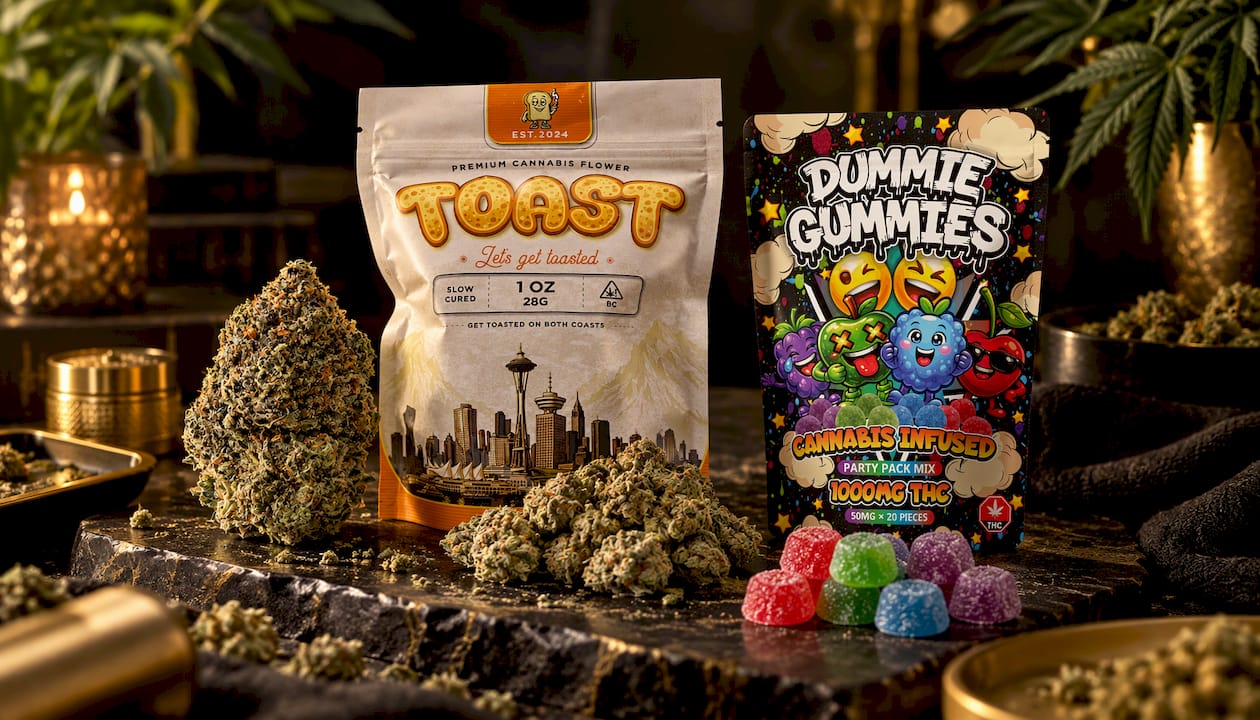
Browse cannabis edibles at FV Buds and use the label checklist above on whatever you add to your cart.
Other things people ask about the name
The reason a rumour like this spreads is that the idea is easy to repeat: one gummy, enormous dose. Anyone who has ever eaten too much of an edible will tell you the same thing about it: the hardest part is that you can’t undo it. The wait time is longer than most people expect, the effects arrive late and hold on for hours, and sleep does not always come easily when anxiety is part of the picture.
That’s why the standard guidance emphasises preparation rather than avoidance. Have water and a snack nearby, a calm space, and a person you trust. Keep your dose small and your timing patient, and edibles are a manageable, predictable way to consume cannabis. Treat them as a contest, and the experience becomes unpredictable.
If you are buying for medical or therapeutic reasons, talk with your doctor or pharmacist about doses, particularly if you take other medication or have a heart or mental health condition. Health Canada’s consumer information is clear that higher THC raises the risk of adverse effects, and a health professional can help you set a dose that makes sense for your situation.
FAQ
What is a Star of Death edible?
It is a star-shaped THC gummy marketed with a very high dose, often hundreds of milligrams per package. The name is a nickname for the product style and is unrelated to the Death Star flower strain. In Canada, legal edibles are limited to 10 mg THC per package.
What is the strongest edible you can buy in Canada?
The federal limit for edible cannabis is 10 mg THC per immediate container, so that is the strongest legal food-like edible package. Cannabis extracts follow different rules and can hold more THC, but they are not edibles and are not intended to be eaten like food.
Is the Death Star strain strong?
Death Star is a cannabis flower strain with a reputation for potency, but strength varies by batch and grower. It is flower, not an edible, and the effects of smoking it differ from the slower, longer effects of eating THC. Check the THC percentage on the label of any flower you buy.
How much should a beginner take?
Health Canada advises new consumers to choose an edible containing 2.5 mg THC or less. Wait at least two hours before considering a second 2.5 mg dose, since full effects can take up to four hours to arrive.
What should I do if I feel unwell after an edible?
Stay somewhere safe with people you trust and do not drive. British Columbia’s guidance is to call BC Poison Control, call 911 or go to a hospital if you feel unwell. Elsewhere in Canada, contact your regional poison centre or emergency services.
Sources
- What you need to know if you choose to consume cannabis, Health Canada
- Classification of ingestible cannabis products: edible cannabis, Health Canada
- Cannabis Regulations, section 102.7, Justice Laws
- Cannabis Regulations, section 132.18, Justice Laws
- How to read and understand a cannabis product label, Health Canada
- Cannabis and Kids, Ontario Poison Centre
Recommended
- Canndy Edibles – THC Chewies (480mg)
- Cannabis Candy & Gummies – Same Day Delivery
- Edibles Langley – Shop THC Gummies Online
- Healthy and Delicious: 5 Cannabis-Infused Recipes That Will Surprise Your Taste Buds
